
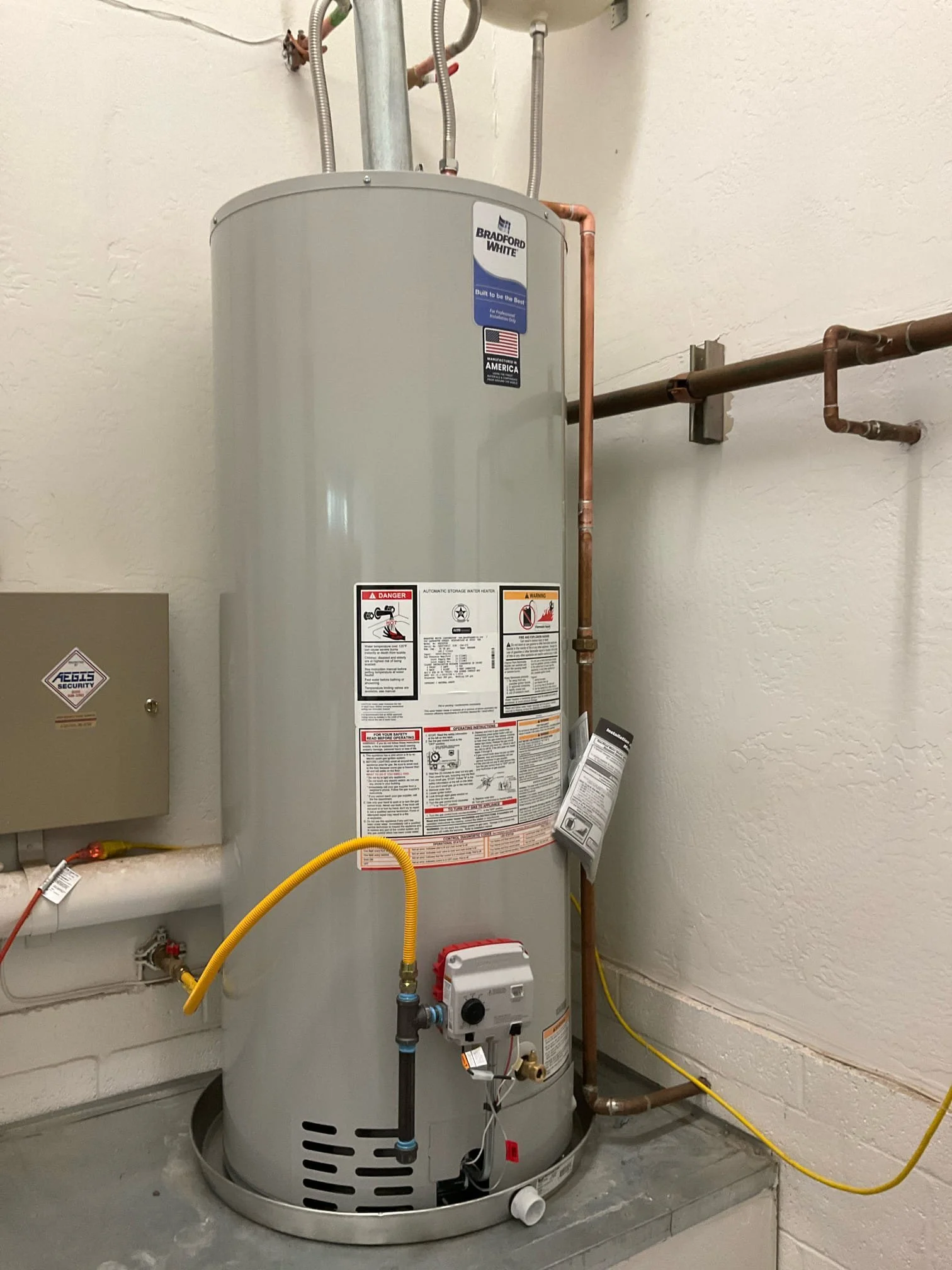
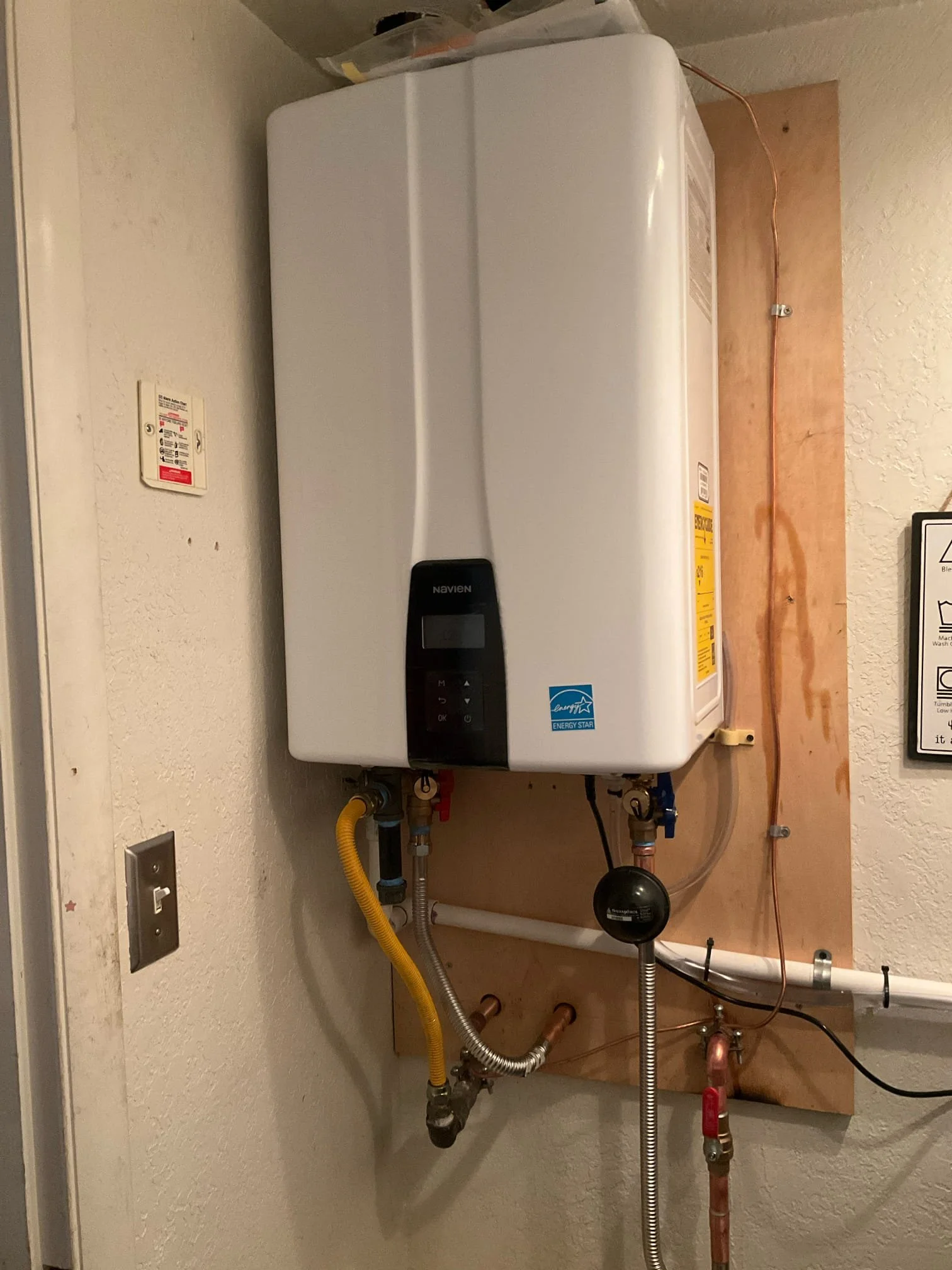
The right water heater depends on your household size, how much hot water you use at once, and your fuel type. For most Flagstaff homes, that means choosing between a standard tank, a tankless unit, or a hybrid heat pump model. The best choice balances upfront cost, available space, and matching the equipment used to your hot water needs.
What Are My Main Options?
There are three common types of water heaters installed in Northern Arizona homes:
Tank water heaters: Store and heat 40-75 gallons at a time. Lower upfront cost, simple to install, but limited hot water once the tank runs out.
Tankless water heaters: Heat water on demand as it flows through the unit. No storage tank means no "running out," but they have a maximum flow rate depending on the incoming water temperatures. So the colder ground water in Flagstaff/Sedona/Williams limits how much “endless hot water” you can get.
Hybrid heat pump water heaters: Pull heat from surrounding air to warm the water instead of using electric resistance coils alone. They use less energy than a standard electric tank but need space and airflow around the unit to work efficiently.
How Do I Pick the Right Size?
Sizing depends on your household's peak demand (the busiest hour of hot water use in your home), not just total daily use. A family running two showers back-to-back while the dishwasher cycles needs more capacity than someone living alone.
For tank units, a 50-gallon tank typically covers a household of 3-4 people under normal use. For tankless units, sizing is based on gallons-per-minute (GPM) flow rate rather than storage volume; undersizing is the most common mistake homeowners make when switching from tank to tankless.
Does Flagstaff's Altitude or Climate Change Anything?
Yes. At roughly 7,000 feet, incoming groundwater runs colder than at lower elevations, which means any water heater has to work harder to reach the same output temperature. This matters most for tankless units, since colder incoming water lowers their effective flow rate.
Cold winters also mean garages and unconditioned utility closets can drop low enough to affect heat pump water heater efficiency, since they rely on pulling warmth from the surrounding air.
What About Fuel Type and Existing Setup?
Switching fuel types (electric to gas, or vice versa) usually costs more than replacing a unit with the same type, because it can require new venting, gas lines, or electrical work. If your home already has gas service and proper venting, staying with gas is usually the more straightforward and lower-cost option.
A few questions worth answering before you decide:
What fuel type does your home currently have set up?
How many bathrooms and major appliances run off hot water?
Is your water heater located somewhere temperature-controlled, or in an unconditioned space?
Bottom Line
There's no single "best" water heater; there's a best fit for your household and your home's setup. If you're not sure which direction makes sense, a quick conversation with someone who's actually installed these units in Flagstaff homes will save you from guessing.
Call TCR Rooter & Plumbing Repair at 928-773-4905. We can walk through your hot water usage and your home's setup and tell you straight what makes sense, no pressure either way.